Sunday, 16 October 2022

Ranking The Bond Films (Part 3/3): The Top Five

This month marks the 60th anniversary of the release of Dr. No, the first film in the James Bond series. Directed by Terence Young, the movie established not only one of cinema's most enduring heroes but the entire action movie genre.

In commemoration of the series' beginnings, I have ranked all twenty-five films in the main series. If you haven't read Part One yet, featuring the movies ranked 25-16, you can do so here. Part Two, counting down the films ranked 15-6, can be read here. Spanning six decades and the tenures of six actors, the films are as fascinating in their own right as they are snapshots of the times in which they were made. One of the many great things about the series is that it offers so many entry points, with any one film having a wildly different tone to another, that there can never be a conclusive list of the best Bonds. This ranking is simply my own, and if you too are a fan, you will appreciate that disagreement is not just expected, but essential. Finally, here are my top five Bond films. Enjoy.

Wednesday, 12 October 2022

Ranking The Bond Films (Part 2/3): 15 - 6

Poster Credit: Sean Longmore

This month marks the 60th anniversary of the release of Dr. No, the first film in the James Bond series. Directed by Terence Young, the movie established not only one of cinema's most enduring heroes but the entire action movie genre.

In commemoration of the series' beginnings, I'll be ranking all twenty-five films in the main series. If you haven't read Part One yet, featuring the movies ranked 25-16, you can do so here. Spanning six decades and the tenures of six actors, the films are as fascinating in their own right as they are snapshots of the times in which they were made. One of the many great things about the series is that it offers so many entry points, with any one film having a wildly different tone to another, that there can never be a conclusive list of the best Bonds. This ranking is simply my own, and if you too are a Bond fan, you will appreciate that disagreement is not just expected, but essential. Enjoy.

Saturday, 8 October 2022

Ranking The Bond Films (Part 1/3): 25 - 16

This month marks the 60th anniversary of the release of Dr. No, the first film in the James Bond series. Directed by Terence Young, the movie established not only one of cinema's most enduring heroes but a whole new genre. If Alfred Hitchcock's North By Northwest laid the foundation for the modern action movie, it was Goldfinger which built the house with its focus on big-budget spectacle, a larger-than-life villain with an audaciously implausible plot, and a stylish, implacably cool hero helped by high-tech gadgetry and beautiful women. As much as the Bond films have always moved with the times, often chasing trends, it took decades - the action boom of the eighties - before the rest of the industry began to replicate the high-octane formula which made the classic Bonds so timelessly exciting.

In commemoration of the series' beginnings, I'll be ranking all twenty-five films in the main series. This excludes the unofficial and mostly terrible Never Say Never Again, released by a Thunderball producer who had clung onto certain rights to the story, and the fascinating trainwreck which is the 1967 'comedy' adaptation of Casino Royale. Both would be near the bottom of the list if included. The main series alone offers plenty to be getting on with: spanning six decades and the tenures of six actors, the films are as fascinating in their own right as they are snapshots of the times in which they were made. As a result, one of the many great things about the series is that it offers so many entry points, with any one film having a wildly different tone to another, that there can never be a conclusive list of the best Bonds. This ranking is simply my own, and if you too are a Bond fan, you will appreciate that disagreement is not just expected, but essential. Enjoy.

Thursday, 30 September 2021

Movies: No Time To Die (no spoilers) review

FILM REVIEW

Review Scoring Chart - 10: Masterpiece; 9: Outstanding; 8: Very Good; 7: Good; 6: Above Average; 5: Average; 4: Below Average; 3: Bad; 2: Awful; 1: Reprehensible; 0: Non-Functional.

NO TIME TO DIE
Dir: Cary Joji Fukunaga
Stars: Daniel Craig, Léa Seydoux, Lashana Lynch, Rami Malek, Ben Whishaw 
Running Time: 163mins

No Time To Die arrives a year shy of the venerable Bond series' 60th anniversary and concludes the tenure of Daniel Craig in the lead role. Though all but Goldfinger of the original six films contained some degree of serialisation, Craig's time in the lead role has been characterised by plots more tightly interwoven with each other than ever before, all concerned with answering the question of who James Bond is, what role he has to play in the modern world, and what, if anything, that means.

If any conclusions can be reached from what No Time To Die has to offer, few feel satisfying and most outright misguided. Nine years ago, Skyfall - then a standalone film, since uncomfortably retconned into the increasingly incoherent Craigiverse continuity - delivered a self-assured and conclusive answer: Bond as the modern Arthur, an eternal defender forged in the best values of old but existing in a cycle of rebirth and evolution to deal with the threats of changing times. No Time To Die's version of Bond also exists somewhat in legend - one character refers to himself as a 'big fan' of the temporarily-retired spy - but looking at how he's characterised this time around, one can only wonder why.

Thursday, 9 September 2021

Games: No More Heroes III (Nintendo Switch) review


GAME REVIEW

Review Scoring Chart - 10: Masterpiece; 9: Outstanding; 8: Very Good; 7: Good; 6: Above Average; 5: Average; 4: Below Average; 3: Bad; 2: Awful; 1: Reprehensible; 0: Non-Functional.

NO MORE HEROES III
Developer: Grasshopper Manufacture
Publisher: Marvelous
Platform: Nintendo Switch
 
Goichi Suda, alias: Suda51, remains a rarity in the world of game design: a true auteur. That's not to suggest there's a shortage of well-known or talented designers out there, but few have back catalogues which feel as much a result of a singular artistic vision. As is the case with his stated or assumed influences from the film world, artists like David Lynch or Alejandro Jodorowsky, Suda's games presents worlds which are outwardly insane, but inwardly purposeful. The original No More Heroes was, on the surface, about a lightsabre - sorry, 'beam katana' - wielding geek slaughtering his way thorugh an array of eccentric bosses to reach the top of an assassins' ranking list, all in hope of getting into the pants of a sexy femme fatale. Underneath, it was a story about letting go of past traumas, about how a life of killing destroys the soul, and the emptiness of pursuing external glory rather than personal fulfilment.

No More Heroes III marks a return for Suda to the director's chair of a major game, having withdrawn from the spotlight for over a decade following an extremely difficult experience with EA Games developing Shadows Of The Damned. A small-scale warm-up to this game, 2019's Travis Strikes Again, was the first time Suda had been credited as a game director since the original No More Heroes in 2007. Despite NMHIII's flaws, it is a bold and exciting a reminder of how much the gaming world has missed him.

Friday, 3 September 2021

Summer Movie Mini-Review Roundup, Part Two (including Shang-Chi & The Legend Of The Ten Rings)

Review Scoring Chart - 10: Masterpiece; 9: Outstanding; 8: Very Good; 7: Good; 6: Above Average; 5: Average; 4: Below Average; 3: Bad; 2: Awful; 1: Reprehensible; 0: Non-Functional.

Although cinemas have only just started to reopen as mass vaccination takes the edge off the COVID pandemic, there has been no shortage of movies of all shapes and sizes to watch over the past months. From comic book blockbusters like The Suicide Squad or Black Widow, to more niche genre pieces like Censor or Pig, there has been a satisfying variety of offerings compared to more traditional cinematic summers, which tend to be dominated by major studio releases alone.

Rather than review each individually, these round-ups comprise short reviews of several films released to UK viewers over the past few months. The reviews in Part Two are The Suicide Squad, The Green Knight, Zola, Free Guy, Gunpowder Milkshake, Pig and Shang-Chi & The Legend Of The Ten Rings. Part One, published last Monday, comprised Black Widow, Another Round, Reminiscence, Censor, Jungle Cruise and Old.

Monday, 30 August 2021

Summer Movie Mini-Review Roundup, Part One

Review Scoring Chart - 10: Masterpiece; 9: Outstanding; 8: Very Good; 7: Good; 6: Above Average; 5: Average; 4: Below Average; 3: Bad; 2: Awful; 1: Reprehensible; 0: Non-Functional.

Although cinemas have only just started to reopen as mass vaccination takes the edge off the COVID pandemic, there has been no shortage of movies of all shapes and sizes to watch over the past months. From comic book blockbusters like The Suicide Squad or Black Widow, to more niche genre pieces like Censor or Pig, there has been a satisfying variety of offerings compared to more traditional cinematic summers, which tend to be dominated by major studio releases alone.

Rather than review each individually, these round-ups comprise short reviews of several films released to UK viewers over the past few months. The six are Black Widow, Another Round, Reminiscence, Censor, Jungle Cruise and Old. Part Two looks at The Suicide Squad, The Green Knight, Zola, Free Guy, Gunpowder Milkshake, Pig and Shang-Chi & The Legend Of The Ten Rings.

Friday, 23 April 2021

BS With Friends Podcast: On Her Majesty's Secret Service


I was privileged to take part in a very enjoyable podcast about one of my favourite James Bond films, On Her Majesty's Secret Service, with resident hosts, Maxwell Roahrig and Xzyliac Ariel. We cover some recent entertainment news stories, Peter Hunt's borderline experimental editing, how Bond beat the Fast & Furious franchise to punch with a flying car (in addition to a double-taking pigeon), and On Her Majesty's gay influence, helped in part by writer Simon Raven, an old-school libertine who was expelled from school - and I quote said school's obituary - 'less for homosexuality than for the bravura with which he practiced it'.
 
Below the jump are links to articles I've written on this blog about Bond, including a set of film reviews and why OHMSS is the great unrecognised Christmas movie. Have fun!

Saturday, 10 April 2021

In Life And In Death, Prince Philip Embodied The Value Of The British Monarchy

The past few years have been turbulent for the British Royal Family. A slew of controversies, from the links between Prince Andrew and convicted sex offender Jeffrey Epstein, to the departure of Prince Harry and Meghan Markle and their subsequent accusations of experiencing racism within the 'Firm', have led to increased questioning among the young in particular about what the monarchy is for and why it exists in an age of democracy and representation. The death of Prince Philip yesterday, the man who dutifully stood two paces behind the Queen for over seventy years and did more than anyone to make the monarchs visible and accessible to the public, will plausibly only galvanise such questions once the mourning period has faded.

Though many monarchists may recoil at the question being asked at all, it serves an important purpose not only in testing the resilience of the nation's institutions, but the clarity of people's understanding of their usefulness. The Royal Family is not elected or directly accountable to its people, nor should it be, but it cannot persist unless the people feel proud to be represented by them and that the values they embody are the right ones. In this, the allegations surrounding Prince Andrew's close friendship with Jeffrey Epstein, and the Palace seemingly closing ranks to protect him, have been particularly corrosive. If the public is unsure why the monarchy remains important in spite of any controversies surrounding it, either the people in charge of maintaining our institutions, or the institutions themselves, are not doing their job. In this respect, while the death of Prince Philip, the Duke of Edinburgh, may be the first step in a period of transition for the monarchy, the remembrance of his remarkable life may also serve to remind the British people of its immense value to the nation and the world.

Friday, 2 April 2021

Uncertainty As The Path To Resurrection In Dante's Commedia

The Christian holidays have become largely divorced from their original meanings. In some ways this is helpful, allowing them to be days of universal celebration rather than exclusively serving a single section of our theologically diverse societies. Christmas is these days about giving, gratitude, and reuniting with loved ones, rather than specifically a celebration of Christ's birth. Christ's story encompasses those qualities, but what is celebrated are the shared values rather than the event itself. Though most are aware of Christmas' religious origins - it's right there in the name - the connection is not necessarily made between those origins and the values it now represents. This inevitably leads to the hackneyed complaint that Christmas is just about 'capitalism', which says more about the complainer's inability to understand the value of giving than they might have wished.

Easter is further divorced from the reasons for its Christian celebration than Christmas. In part, this is because the name does not tie in so obviously. According to the Venerable Bede, a seventh-century monk known as the 'Father of English history' for his ecumenical writings, the month of Christ's resurrection was called Eostremonath in Old English, named for the goddess Eostre. The association between the two stuck even after the name of the month changed. Aside from the loose symbolism of eggs to birth, the idea of resurrection has been lost in how we celebrate Easter today. In search of that original meaning and how it relates to our contemporary lives, we should look to one of the great works of the global literary canon, whose narrative not coincidentally begins on Maundy Thursday, just before Easter Weekend: Dante Alighieri's epic poem, the Commedia.

Friday, 19 March 2021

Movies: Zack Snyder's Justice League review

FILM REVIEW

Review Scoring Chart - 10: Masterpiece; 9: Outstanding; 8: Very Good; 7: Good; 6: Above Average; 5: Average; 4: Below Average; 3: Bad; 2: Awful; 1: Reprehensible; 0: Non-Functional.

ZACK SNYDER'S JUSTICE LEAGUE
Dir: Zack Snyder
Stars: Ben Affleck, Gal Gadot, Ray Fisher, Ezra Miller, Jason Momoa, Henry Cavill
Running Time: 242mins

Zack Snyder's cut of the 2017 Justice League movie sits at the nexus between the Donner cut of Superman II and Snyder's own extended edition of Justice League's much-derided predecessor, Batman v Superman. Although director's cuts of movies have existed for a long time, the 2006 re-edit of Superman II to fit the vision of original director, Richard Donner, was the first time a movie had been effectively remade and rewritten with unused footage and the removal of any scenes added by the director who took over the project. Ten years later, Zack Snyder used the home release of Batman v Superman to signficantly extend the running time and clarify the near-incoherent narrative of the theatrical cut.

Snyder's re-edit of Justice League does a little of both: it removes all trace of Joss Whedon's contribution to the 2017 release and uses its massively extended running time - doubled, in fact - to add missing character motivations and give the story room to breathe. Like his Batman v Superman extended cut, it improves on many of the fundamental shortcomings of the original release. However, just as the Donner cut simply turned a bad movie into a different kind of bad movie, Snyder's Justice League may be different from Whedon's cut, but whether it's a better movie overall is an open question.

Tuesday, 9 March 2021

Appreciating Nikki van der Zyl, Who Gave The Women Of James Bond Their Voice

For a series whose hero embodies the masculine id, the history of women's influence on the James Bond movies is a long and fascinating one. The figure of the Bond girl is the most famous and most analysed, though the importance of the many women who have guided the series from behind the screen is just as great, albeit less widely recognised. A prominent modern example would be Barbara Broccoli, the daughter of one of the series' original producers, Cubby Broccoli, and who now runs the show along with her half-brother, Michael G. Wilson. A less known example would be Johanna Harwood, an Irish screenwriter who was a credited screenwriter on the first two Bond movies, Dr. No and From Russia With Love, and contributed uncredited work to Goldfinger.

One of the least recognised names is Nikki van der Zyl, yet if you haven't heard of her, as a Bond fan you certainly will have heard her. A German voiceover artist who died three days ago aged 85, van der Zyl leaves behind a legacy which shaped the Bond girl icon every bit as much as Ursula Andress - whose voice van der Zyl dubbed.

Sunday, 21 February 2021

Adam Curtis' Nostalgia For Radicalism Paints A Bleak Picture Of A World Changing For The Better

Adam Curtis released his latest documentary series, 'Can't Get You Out Of My Head', last week. All six episodes are currently available for UK viewers to watch on the BBC's iPlayer, while worldwide viewers can watch it here. As one might expect from Curtis, it is an expertly made visual collage with a superlative soundtrack, telling the stories of some fascinating figures largely forgotten to history, which Curtis ties together as part of his overall mission statement. This time, he is telling an 'emotional history' of how Western society embraced individualism to compensate for how the radicals of the past failed the change the world for the better, eventually leading to the rise of conspiracy theories and populism.

If that sounds familiar to Curtis' fans, it should: the documentary acts as something of a greatest hits of his previous concerns, ending up feeling almost as much of a retreat into Curtis' own history as that of the world. His signature phrases, '...And then something strange happened' and 'So they went back, into the passed' are trotted out in key moments much as how Marvel deploys beloved characters at unexpected moments for maximum fan excitement. It's as exciting, electric and eclectic as the best of his work to date. But then something strange happened: in going back, into his past, Curtis became infected with the very nostalgia-driven nihilism he attributed to others. In repeating his familiar refrains about our failures to improve the world, he missed how the world has been steadily improving in a different way to how he was expecting.

Sunday, 14 February 2021

Games: Super Mario 3D World + Bowser's Fury (Nintendo Switch) review

GAME REVIEW

Review Scoring Chart - 10: Masterpiece; 9: Outstanding; 8: Very Good; 7: Good; 6: Above Average; 5: Average; 4: Below Average; 3: Bad; 2: Awful; 1: Reprehensible; 0: Non-Functional.

SUPER MARIO 3D WORLD + BOWSER'S FURY
Developer: Nintendo
Publisher: Nintendo 
Platform: Nintendo Switch
 
Nintendo's latest console, the Switch, is awash with games carried over from its previous one, the Wii U, which sold far less well. It's a strategy which has been a boon for Nintendo, padding out the Switch's library with games which never got the chance to sell as well as they might have, but less so for those of us who owned a Wii U in the first place, who have found original releases few and far between. In order to combat this, Nintendo has taken to adding extra material to the games in question. On the whole, this material has been half-hearted at best, with an extra character added to Donkey Kong: Tropical Freeze and a few token side-missions reusing environments in Pikmin 3.

The headline extra in the port of Super Mario 3D World is a mode entitled 'Bowser's Fury', a more substantive addition which, were it not for its short length - about two hours to see the credits, perhaps four to finish everything - could be called a new game in its own right, one possibly hinting at a more open-world, non-linear future for the Mario series than even Odyssey, the Switch's own original Mario title.

Wednesday, 10 February 2021

Movies: Promising Young Woman review

FILM REVIEW

Review Scoring Chart - 10: Masterpiece; 9: Outstanding; 8: Very Good; 7: Good; 6: Above Average; 5: Average; 4: Below Average; 3: Bad; 2: Awful; 1: Reprehensible; 0: Non-Functional.

PROMISING YOUNG WOMAN
Dir: Emerald Fennell
Stars: Carey Mulligan, Bo Burnham, Alison Brie, Laverne Cox
Running Time: 113mins

The rape-revenge movie has a long and inglorious history of adopting a false stance of female empowerment in order to fulfil male fantasies, not just in terms of sexualising the traumatic assault, but in the act of revenge itself. Revenge in these movies is typically enacted on the physical bodies of the perpetrators, a male sense of power twinged with BDSM undertones by having a woman as the heroine. Promising Young Woman's most potent idea is to feminise the concept of revenge: what if the heroine's vengeance was not on the body, but on the soul? What if, for a moment, she could make those who inflicted trauma on others see themselves for who they really are and understand the gravity of what they have done?

Promising Young Woman's writer/director, Emerald Fennell, was also the showrunner on the second season of Killing Eve. Despite the strength of its core ideas, Fennell unfortunately carries over the weaknesses of her tenure on that show to her first full-length feature behind the camera, notably an inability to maintain the razor-edge balance between drama and irony which Phoebe Waller-Bridge made look so effortless. The intensity of feeling behind the material and its central character is never in doubt, though perhaps ironically, Promising Young Woman is too wounded to achieve its full potential.

Wednesday, 3 February 2021

2020 Movie Catch-Up Review: Wonder Woman 1984

FILM REVIEW

Review Scoring Chart - 10: Masterpiece; 9: Outstanding; 8: Very Good; 7: Good; 6: Above Average; 5: Average; 4: Below Average; 3: Bad; 2: Awful; 1: Reprehensible; 0: Non-Functional.

WONDER WOMAN 1984
Dir: Patty Jenkins
Stars: Gal Gadot, Chris Pine, Pedro Pascal, Kristen Wiig
Running Time: 151mins

Wonder Woman 1984 shares more than a little in common with Gal Gadot's infamous celebrity rendition of 'Imagine': both well-intentioned, yet tone deaf and hopelessly misjudged in every conceivable way. WW84 brings to light how much of its predecessor's success was rooted in its setting. The horrors of WW1's trenches and war-torn landscapes gave the original Wonder Woman an emotional and thematic heft which its sequel's lazy pastiche of Eighties fashions and hues, unsurprisingly, cannot come close to matching.

Wonder Woman emphasized the values and value of its heroine by transporting her - a sheltered, yet powerful and intensely compassionate woman - into one of the most apocalyptic periods of human history and letting the audience experience it with her first as despair, then as hope as she used her power to do something about it. WW84's setting, by contrast, evokes nothing about its heroine and forces the film to resort to meaningless bromides, whose espoused values it itself does not even stick to.

Monday, 25 January 2021

Do You Want To Build A Snowman? The Importance Of Small, Spontaneous Joys

It snowed in London yesterday, so I took the opportunity to walk to my local park. I stopped at one of my favourite spots, a small bridge overlooking a pond with a tree growing out of an islet in the middle and a small waterfall rippling in the background. The pond was partially frozen over and trails had been cut through the thin ice by ducks swimming to and fro from the shore. The bare branches of the tree were dusted with snow which was lightly shaken away whenever a bird landed or departed from them. At one point, geese flew overhead, migrating from the pond on the other side of the bridge for a change of scenery and to take advantage of an elderly woman throwing crumbs from a bag to the ducks in the water.

I've walked across that bridge countless time before, sometimes stopping to enjoy the moment before moving on, but rarely has the simple sense of life in and around it been so noticeable. I've written before about my walks around the park and my enjoyment of the small details which are so easily overlooked. This time, the half an hour I spent looking out across the little pond made me aware of how much the lockdowns of the past year have deprived so many of us of the experience of watching life innocuously unfold around us, whether in trails through an icy surface or snow displaced from a tree branch. It has also deprived us of the human contribution to that tapestry, the traces of our existence we leave behind not only as part of our own stories, but as additions to the stories of others. Specifically, in this case, a tiny snowman.

Wednesday, 20 January 2021

2020 Movie Catch-Up Review: Soul

FILM REVIEW

Review Scoring Chart - 10: Masterpiece; 9: Outstanding; 8: Very Good; 7: Good; 6: Above Average; 5: Average; 4: Below Average; 3: Bad; 2: Awful; 1: Reprehensible; 0: Non-Functional.

SOUL
Dir: Pete Docter
Stars: Jamie Foxx, Tina Fey, Graham Norton, Rachel House, Richard Ayoade
Running Time: 101mins

Pete Docter's last outing as director, Inside Out, had a lot of big ideas but none of the focus needed to develop them into a coherent whole. It managed to be completely underdeveloped in its thinking while simultaneously too overtly structured around an increasingly predictable Pixar formula. Soul feels like the kind of movie Docter intended to make last time out: its big ideas are grounded in enough internal logic that its abstract and metaphysical questions are communicated with an easy clarity. allowing any little gaps to be glossed over without becoming distracting. Its adherence to the Pixar formula is stronger than ever - similarities in plot and theme to the company's own Coco from 2017 are legion - but the rigour of the writing and world-building allow that underlying structure to strengthen the storytelling rather than highlight its flaws.

Soul tells the story of a struggling, middle-aged jazz musician who dies immediately after receiving his big break. Finding himself as a soul adrift in the afterlife, his attempts to return to his body on Earth lead him to mentor an unborn soul sceptical about the value of physical existence. Despite the premise's potential for saccharine sentimentality, Docter skillfully edges the film in the predictable direction before swerving into a bolder, more intriguing treatise, a hallmark of all the best Pixar movies to date.

Friday, 15 January 2021

Marvel's Wandavision Season 1 Episodes 1 + 2 TV Review

Wandavision marks Marvel's latest foray into the world of television. Prior attempts to connect their big screen output to the small screen have not gone so well: Agents Of SHIELD began as a companion piece to the movies, but such close alignment resulted in a show playing perpetual catch-up and which only developed into a satisfying endeavour in its own right once the cord was severed. Subsequent efforts, including Agent Carter and Netflix shows such as Daredevil and Jessica Jones, tied into the cinematic universe in only the loosest sense.

Wandavision's approach is closest to that of Agent Carter, which featured characters from the movies in a self-contained story arc. Marvel's return to television is this time quite literal: the series draws heavily from the aesthetics of sitcoms from the 1950s and '60s, telling the story of the relationship between an android, Vision, and a telekinetic witch, Wanda, as they attempt to settle into (hyper)traditional married life in suburbia. It is here that a press release would affix the addendum 'except nothing is as it seems', which is ironically the problem: as far as premises go, 'dark mysteries lurking in flawless suburbia' is as generic as they come. On the basis of these early episodes, Wandavision looks to be exactly what it seems and nothing more.

Sunday, 10 January 2021

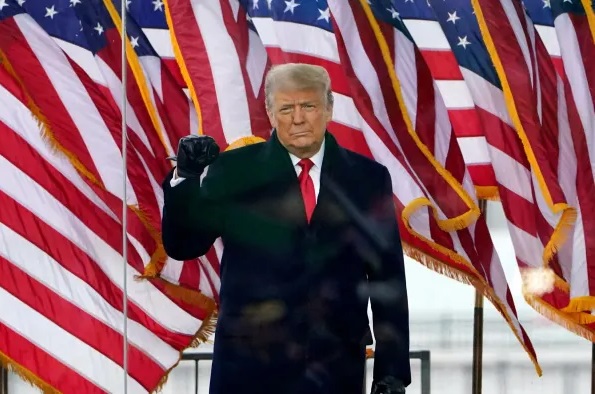
Donald Trump's Twitter Ban Is A Justified Action Which Sets A Terrible Precedent

Donald Trump's incitement of an attack on the Capitol in Washington DC represented the tipping point for social media companies to do what it felt as though they had been equivocating over for a long time and banned the outgoing President of the United States from communicating on their platforms. That it has taken them so long to do so demonstrates the seriousness of the action taken: his missives have been marked and limited, but never fully banned until now.

Many will say that it was a long time coming and few outside the President's most ardent cadre would deny that he has used the platforms as a means of spreading misinformation in the most cynical, self-serving way. There are many reasons to deny Trump access to such platforms, especially after his (and Rudy Giuliani's) direct role in inciting a mob to storm the heart of American democracy. In the here and now, it is an understandable decision to take. In the bigger picture, it sets a potentially catastrophic precedent in allowing private companies free reign to decide which voices to permit or shut down based on nothing more than their subjective criteria.